
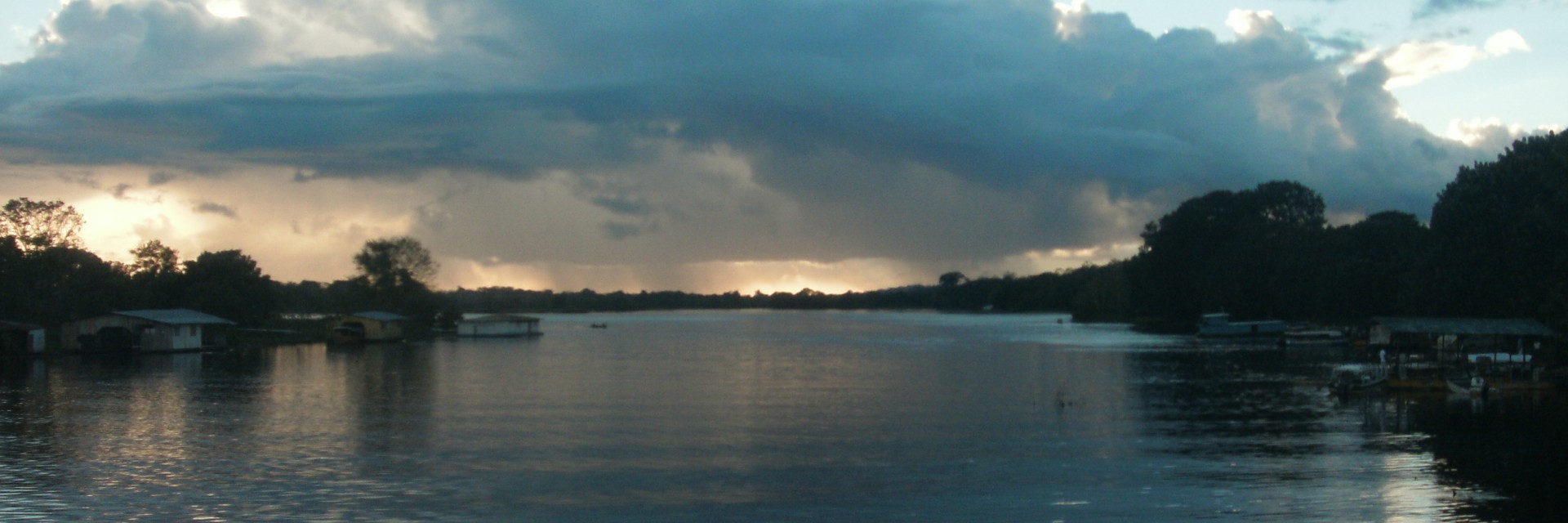
Climate in the Amazon
The Amazon climate, very hot and humid, is equatorial in the North-West and tropical and humid in the rest of the region. Thanks to this, the forest is in an exceptional development, giving shelter to the most various and plentiful living species on earth, which you can discover during your trips in Amazonia.
The average year temperature varies between 24 and 27°C and the daily range between 8 and 10°C. With reference to rainfall (7 to 10 months of rain season), the average is of 150 to 200 mm per month and about 2 000 mm per year. Furthermore, the forest frees an enormous amount of steam and heat and guarantees hereby daily rainfalls, notably at the end of the day.
Ice age
During the last ice age the climate has been almost the same at the equator as it is today, but above the Tropic of Capricorn and under the Tropic of Cancer, the melting of the big glaciers caused the disappearance of numerous species like the mammoth, the sabre-toothed tigre, etc.
However, the climate of the Amazon forest, even if it was colder and drier than it is today, didn't change much and therefore you find there plants, insects and animals which constitute one of the oldest ecosystems of the planet.
Rainfall and River level
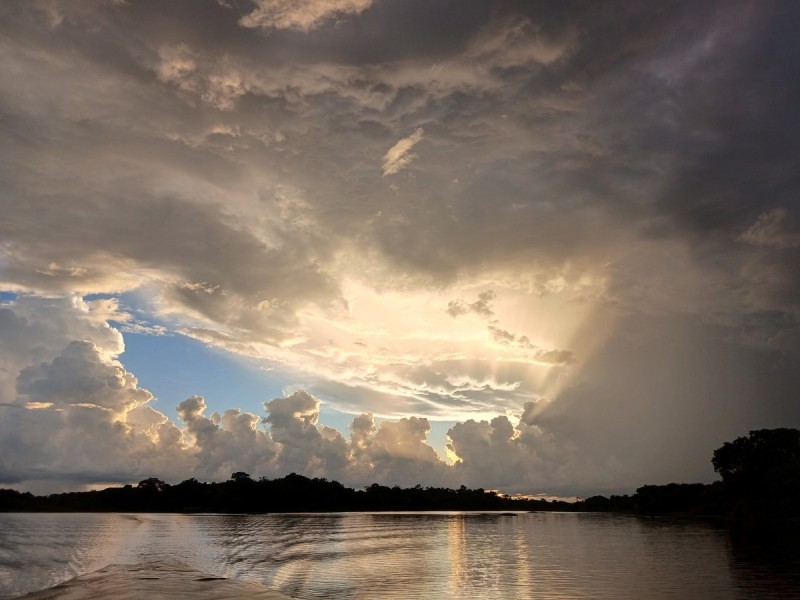
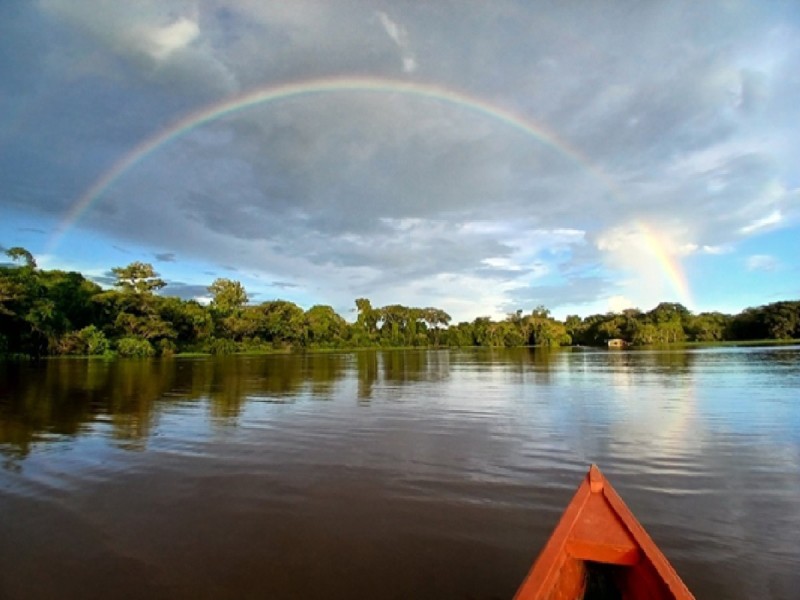
In the region take place a season of very strong rainfall from November to June (with two maxima in January and in June) and a dry season with very high temperature from June to October. Thus you will discover during your excursions in Amazonia that the seasonal changes of the rainfall have a direct impact on the width, the speed and the flow rate of the Amazon river which has to drain every year 15 thousand billions cubic metres of water...
At the time when it crosses Brazil, during the dry season, the Amazon rivers width varies between 1 and 10 km and reaches more than 50 km during the months of heavy rainfall. Its flow rate is thus between 2 and 8 kn/h and the water level can go up 15 metres.