
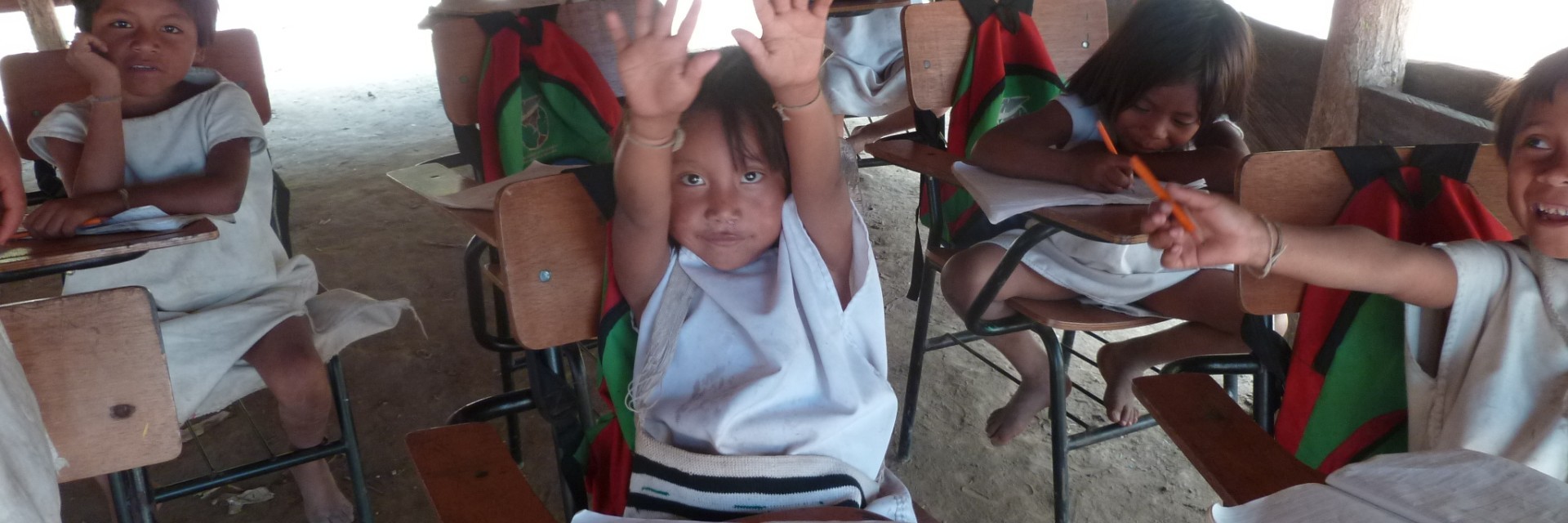
Indigenous peoples
During your journey in Amazonia you will have the occasion to meet members of some of the eighty different native tribes populating Columbia.
These groups that represent close to 3% of the countries population are notably the Ticunas*, the Huitotos*, the Matis, the Shipibos, the Ingas, the Secoyas and the Nukaks.
These indigenous peoples are minders of great cultural wealth, including the diversity of their beliefs and rituals, their intimate knowledge of the local fauna and flora and their around 64 languages and 300 dialects.
These populations are perfectly adapted to the life in the tropical forest and chase the animals living around or inside the rivers, like fish, crocodiles, tortoises, capybaras (the biggest rodent in the world), fauna which you can discover in the course of your excursions in Amazonia.
Their arms are mostly blowguns, poisoned arrows and lances but tend more and more to be replaced by firearms.
Many of them are today sedentary and farmers and the majority of the Amerindian population are living in reserves called resguardos.
Except a tiny part of them who are still living in relative or complete isolation, their way of living includes from then on traditional and modern elements.
*The Ticunas
The Indian Ticunas occupy an important part of the southern region of the Columbian Amazonia.
The largest groups live in the area around Leticia, departing point of circuits to discover the region, at Arara and at Puerto Nariño.
Traditionally the women manufacture baskets and weave clothes whereas the men prepare tissues out of vegetable materials, notably used for the fabrication of masks meant for the ritual of the Pelazón.
This initiation ceremony is practised in the form of a presentation dance for the community of the young pubescent girls. These, colored black and decked with plumages and shells, symbols of fertility, are then surrounded by the women of the tribe and courted by the men circling around them.
*The Huiuotos
The major part of the Huitotos are established in the region marked out by the rivers Caquetá and Putumayo, whereas an other important group lives between the towns Tarapacá and Leticia, from where start the grand majority of excursions and treks in the Columbian Amazonia.
While the Huitoto civilisation almost disappeared during the rubber plant rush at the beginning of the 20th century, the authorities of the country try to implement politics of valorisation and reconstruction of this indigenous population.
One of our excursions in Amazonia will bring you to Maloca, a traditional communitarian habitation and place of worship and Huitoto industry.
Built around four pillars representing the four natural elements, it is a symbol of the ancestral cosmic vision.
Preserving a natural environment and a way of living
While the territorial rights are acknowledged on almost 25% of national territory, the civic autonomy of the indigenous populations is only very rarely taken on board.
Submitted to the upheavals of big infrastructure projects and the exploitation of resources on their territory, the indigenous peoples are threatened to become extinct.
Our agency acts in its measure to try to preserve the protection of their natural environment and their way of living, within the context of the excursions in Amazonia for an eco-responsible tourism.
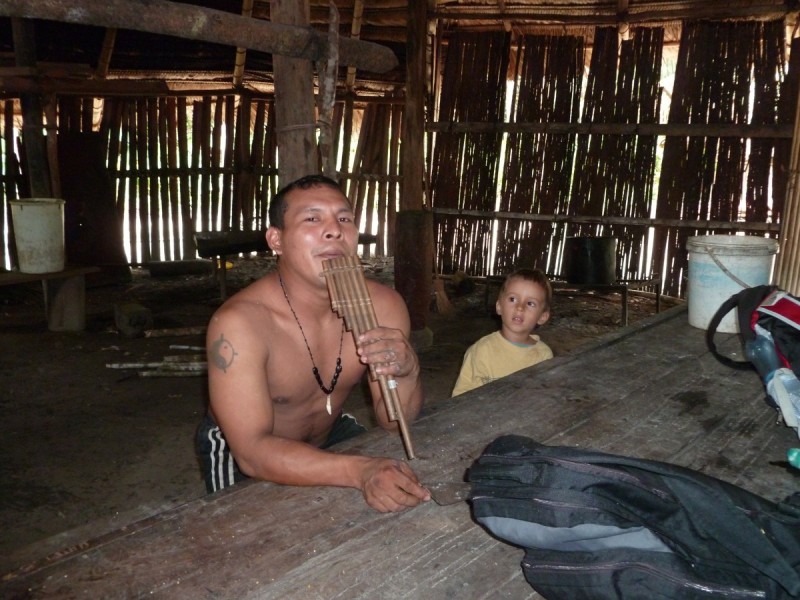
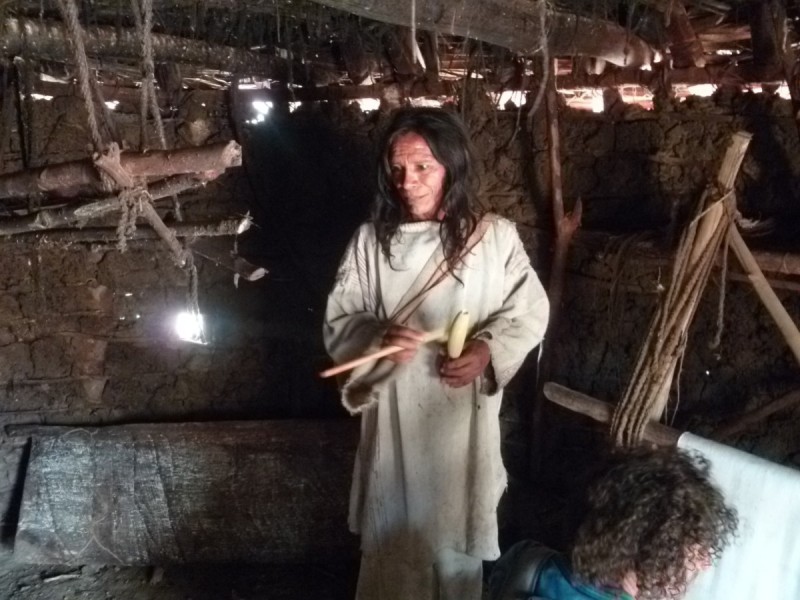
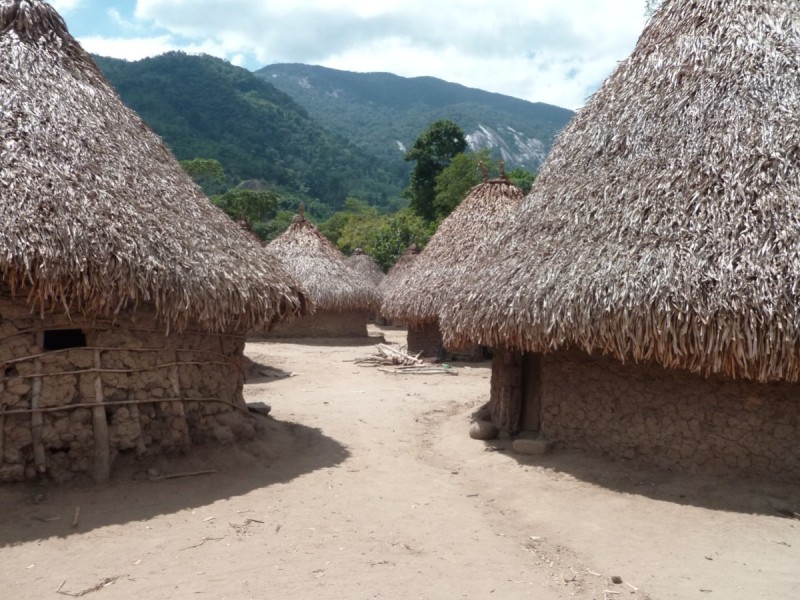
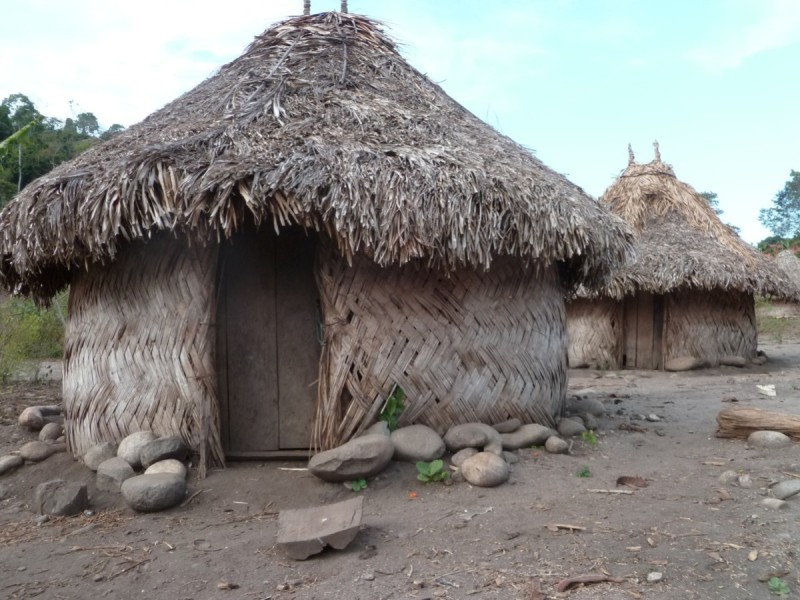
The maloca
It was the Spanish who gave this pejorative name to the traditional houses which you can discover during your voyage in Amazonia. In their language it means “in bad condition” (maluco)
The maloca is the traditional house in which used to live the clan, in other words the family, whilst several of these clans form a tribe. It is house, factory for transforming food and temple all in one.
The maloca is made of wood and chambira (small palm tree) leaves and the floor is of compressed earth. All its mooring lines are made of liana and neither nails nor any metallic tools are used for its construction, as the Amazon natives never used metal. In certain regions not even stones were used, as several big territories didn't have any. A “chagra” (garden) is always attached to the maloca because the latter always depends directly on this chagra or the orchard behind it to feed the clan.
The chief of the maloca has to be married before building it, because it represents the union of man and woman as well as home and protection for their descendants.
Every ethnic group has its traditional methods for building a maloca and, before the arrival of the Spanish and the Portuguese, there existed three big malocas that could take in 300 persons.
The maloca you can visit during your excursions in Amazonia is of the ethnic group of the Huitoto, people of coca and tobacco. These two elements are opposed complementary (yin-yan), the coca-mother and the tobacco-father, as the people of Amazonia are animists.
In a system functioning like a monarchy, the shaman or chief of the maloca (the Maloquero) owns powers and knowledge that are passed down from father to son: management of natural resources, fishing, hunting, culture, etc. This knowledge is transmitted orally, particularly through songs. This way the chief of the clan shares with his successors the management and the techniques of the transformation of plants used for medicine, war and hunt (the poisen “curare”). He knows the secrets about the fabrication of all the tools used for the transformation of food or the pottery used for cooking, as well as all the traditions of his culture.
During your excursions and treks in Amazonia you will discover that each tribe has its territory and that at the margins there are warrior malocas without the usual mud-covered roofs, so that the arrows of the enemy cannot set them on fire.